

Building Your Herbal Medicine Cabinet for Cold & Flu Season
Simple herbs to keep on hand when the colder months arrive
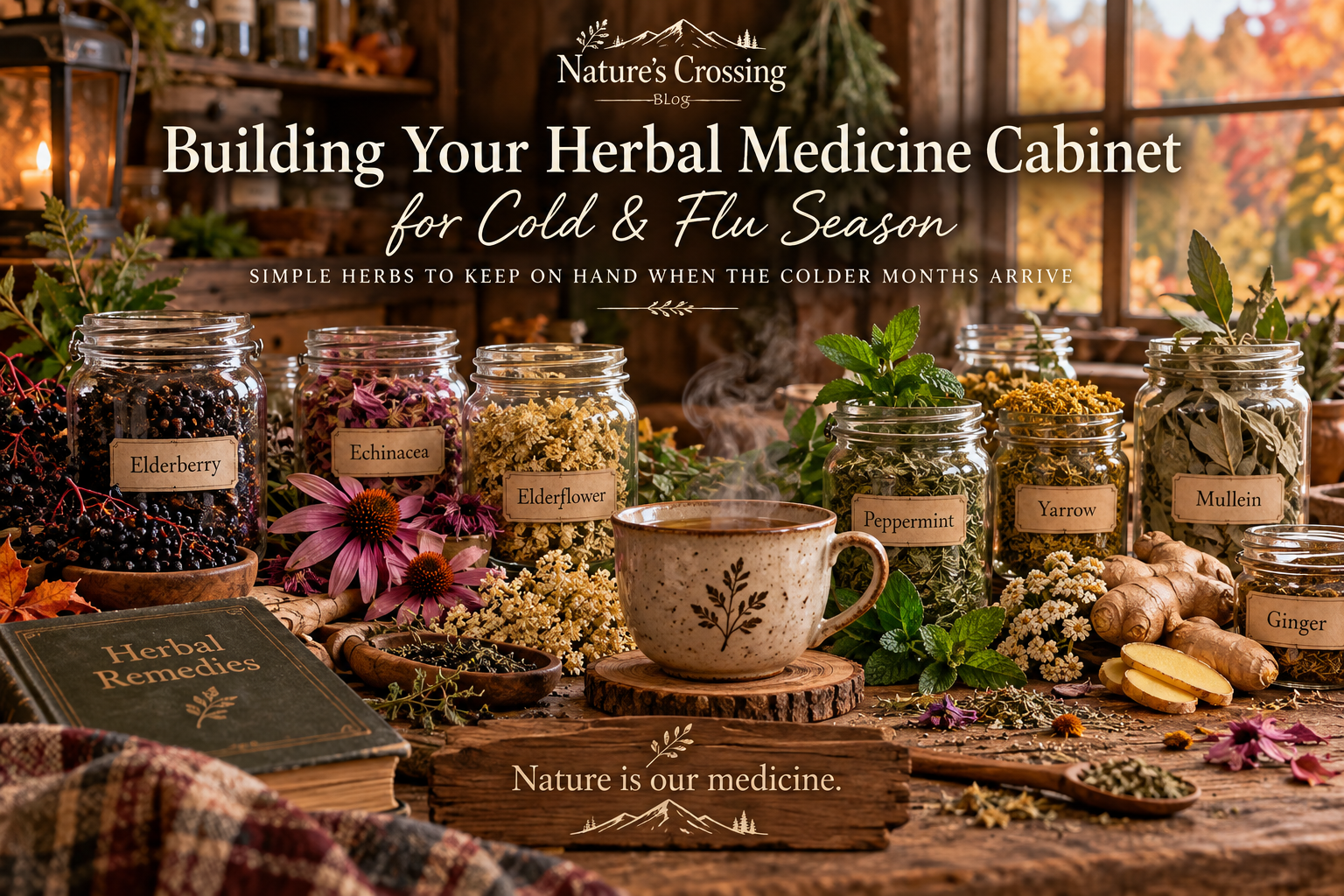
As the days grow shorter and the temperatures begin to fall, many of us start thinking about preparing our homes for the season ahead. We pull out the blankets, put away the summer clothes, and get ready for cooler weather.
But there is another kind of preparation we can make—stocking our herbal medicine cabinet.
For generations, families have kept herbs in their homes to make comforting teas, soothing syrups, steams, and other traditional remedies when someone wasn't feeling their best.
You don't need an enormous collection of herbs to get started. A handful of versatile herbs can give you plenty of options throughout cold and flu season.
Here are some of our favorites at Nature's Crossing.
Elderberry
Those beautiful dark berries have earned a well-loved place in traditional herbalism.
Elderberries are commonly used during cold and flu season and are especially popular in herbal syrups and teas. Their naturally rich, fruity flavor also makes them an easy herb to incorporate into family-friendly preparations.
Ways to use elderberry:
Elderberry syrup
Herbal tea blends
Herbal infusions
Seasonal herbal preparations
One important note: elderberries should be properly prepared and cooked before use rather than eaten raw.
Echinacea
Echinacea is one of the most recognizable herbs associated with seasonal wellness.
Traditionally, herbalists have turned to echinacea for immune support, particularly at the first signs that the body may be fighting something off.
Ways to use echinacea:
Tea
Tincture
Syrup
Herbal blends
Its flavor can be somewhat earthy, so combining echinacea with more flavorful herbs can make a tea more enjoyable.
Yarrow
Yarrow is one of those herbs that reminds us just how useful a well-stocked herbal cabinet can be.
It has a long history of traditional use and is often included in seasonal herbal tea blends, especially when someone is feeling chilled or under the weather.
Yarrow pairs beautifully with herbs such as peppermint and elderflower.
Ways to use yarrow:
Herbal tea
Tincture
Infused preparations
Seasonal herbal blends
Yarrow isn't appropriate for everyone, including during pregnancy, and people with allergies to plants in the daisy family should use additional caution.
Peppermint
If you are just beginning to build an herbal cabinet, peppermint is a wonderful multipurpose herb to have.
Its cooling, refreshing aroma makes a steaming cup of peppermint tea especially comforting when you're congested or simply feeling miserable.
Peppermint is also traditionally used to support digestion, making it useful well beyond cold and flu season.
Ways to use peppermint:
Hot tea
Herbal blends
Infusions
Steam preparations
Sometimes the simplest remedy—a warm mug of peppermint tea, a blanket, and some rest—is exactly what the body is asking for.
Ginger
Ginger brings warmth to an herbal medicine cabinet.
Its spicy flavor works beautifully in teas, syrups, ciders, and other seasonal preparations. Ginger has traditionally been used to support digestion and is particularly useful when nausea or an unsettled stomach accompanies an illness.
Try combining ginger with lemon and honey for a wonderfully warming drink.
Ways to use ginger:
Fresh or dried tea
Herbal syrups
Herbal cider
Honey preparations
Seasonal tea blends
Mullein
Mullein has a long history of traditional use for respiratory support.
The soft leaves are frequently included in herbal teas when someone wants soothing respiratory support, while mullein flowers are also used in traditional herbal preparations.
Because tiny hairs naturally occur on mullein leaves, mullein tea should be strained very carefully through a fine filter before drinking.
Ways to use mullein:
Tea
Tincture
Herbal respiratory blends
Mullein is one of those herbs that may not receive as much attention as elderberry or echinacea, but it can be a valuable addition to a home herbal collection.
Elderflower
The berries aren't the only useful part of the elder plant.
Elderflowers have their own long history in traditional herbalism and are often included in seasonal tea blends.
One classic herbal combination is:
Elderflower + Yarrow + Peppermint
Together, these herbs make a wonderfully aromatic seasonal tea and demonstrate something important about herbalism: herbs don't always have to work alone.
Learning how herbs complement one another opens up an entirely new world of herbal preparations.
Don't Forget the Honey
While technically not an herb, honey deserves a place in the herbal cabinet.
A spoonful can transform a bitter herbal tea, and honey has long been used in traditional preparations for soothing the throat.
It can also be used to make herbal syrups, infused honey, and other remedies.
Important: Honey should never be given to a child under 12 months of age.
Start Small
Walking into an herb shop and seeing dozens—or even hundreds—of herbs can feel overwhelming.
You don't need them all.
Start with a few herbs. Learn what they look like. Smell them. Taste them as tea when appropriate. Learn their traditional uses, precautions, and interactions.
Then slowly expand your herbal cabinet as your knowledge grows.
Herbalism isn't about memorizing hundreds of plants.
It's about developing a relationship with the plants you use.
Always Ask First
Natural doesn't automatically mean safe for everyone.
Herbs can interact with medications, affect existing health conditions, cause allergic reactions, and may not be appropriate during pregnancy, breastfeeding, or for young children.
Before introducing a new herb—particularly if you take prescription medications or have a medical condition—check with a qualified healthcare professional or knowledgeable herbal practitioner.
And when it comes to children, a grown-up should always be in charge of preparing and giving herbal remedies.
Your Herbal Cabinet Will Grow With You
Your first herbal medicine cabinet might contain only peppermint, ginger, elderberry, echinacea, mullein, yarrow, and elderflower.
That's perfectly fine.
Over time, you may discover new plants and preparations. Perhaps you'll learn to make your first tincture. Maybe you'll prepare your own elderberry syrup or make a jar of fire cider.
That's part of the beauty of herbalism.
There is always another plant to meet, another preparation to learn, and another piece of traditional knowledge to explore.
At Nature's Crossing, we believe herbalism doesn't have to be complicated. It begins with curiosity, education, respect for the plants, and a willingness to learn.
One herb at a time.
Nature's Crossing
Nature is our medicine.
This article is for educational purposes only and is not intended to diagnose, treat, cure, or prevent any disease. Herbal products and statements regarding traditional herbal uses have not necessarily been evaluated by the U.S. Food and Drug Administration. Always consult an appropriate healthcare professional regarding medical conditions, medications, pregnancy, breastfeeding, or the use of herbs with children